
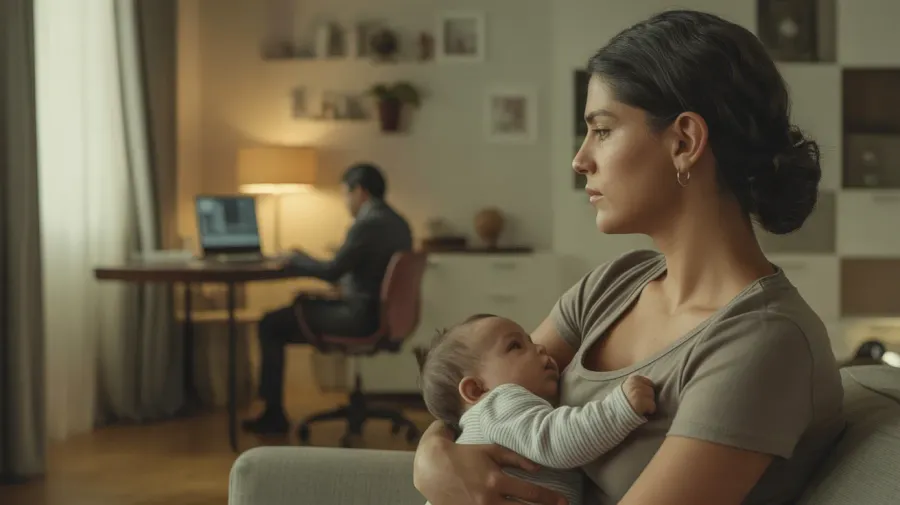
The world-renowned African proverb reminds us that "it takes a whole village to raise a child." However, when a woman becomes a mother in Europe, North America, Asia, or Oceania, the agonizing reality is that the village never made it into the passport.
In clinical psychotherapy, when I welcome expatriate mothers who gave birth far from their native country, the initial consultation unfolds with heartbreaking consistency: dark circles under exhausted eyes, hair tied back in haste, a baby resting in the stroller beside the screen, and a woman on the verge of emotional collapse whispering through tears: "Eliza, I love my child with all my soul, but I feel like I am losing my mind. My husband comes home from work assuming I had a relaxing day at home, and any plea for help detonates an explosive fight."
Maternal exhaustion abroad and the marital crisis after having children represent one of the most acute clinical presentations in cross-cultural psychology. It is not an absence of maternal love, a sign of ingratitude for comfortable foreign living, or biological frailty. It is the predictable physiological collapse of a human body subjected to nonstop caretaking demands with zero structural and communal support.
📖 Foundational Reading: Understand the unique challenges of expat parenting: Expat Mothers: Mental Health, Loneliness, and Burnout.
Motherhood with a Village Back Home vs. Motherhood Alone Abroad
To deconstruct the toxic feelings of maternal failure that haunt these women, we must contrast the communal structure of mothering back home with the isolated expat reality:
| Dimension of Motherhood | Motherhood with a Village Back Home | Solitary Motherhood Abroad |
|---|---|---|
| Immediate Postpartum Care | Physical presence of mothers, grandmothers, and sisters cooking, cleaning, and holding the baby so the new mom can sleep. | Stepping out of the maternity clinic into an empty, chilly flat; cooking, cleaning, and nursing completely alone from day one. |
| Emergencies & Medical Needs | Extended family on call to watch the infant if mom falls ill or has a sudden doctor's appointment. | High anxiety: if mother gets sick, there is no emergency safety net; she must drag a sick infant to every appointment. |
| Marital Intimacy & Date Nights | Grandparents happily babysit once a month so the couple can enjoy dinner and preserve marital romance. | Zero couple time alone for 12, 18, or 24 consecutive months. Total romantic erasure. |
| Physical Sensory Satiation ("Touched Out") | Relatives eagerly pass the baby around, offering mom indispensable physical breaks. | The mother's body is physically demanded 24/7. By evening, her husband's touch feels like an intrusive sensory invasion. |
| Cultural Validation | Easy conversations at the park, familiar maternal wisdom, intuitive communication. | Cold, highly protocol-driven foreign health systems, subtle judgment from local neighbors. |
The clinical verdict is undeniable: you are not failing as a mother or as a wife; you are attempting to perform alone the monumental labor that biology and human history designed for an entire community.
The Neurobiology of Maternal Exhaustion: The Sleep-Deprived Brain
Chronic postpartum sleep fragmentation does more than cause physical lethargy; it fundamentally alters the architecture of the maternal brain, compromising emotional regulation and marital patience.
🧠 The Neurochemical Cascade of Expat Maternal Burnout:
- REM and Non-REM Sleep Fragmentation: Waking every two hours prevents the completion of cellular repair cycles, dysregulating prefrontal cortical function.
- Sudden Postpartum Hormonal Drop: Immediately following birth, circulating estrogen and progesterone crash by over 90% within hours, destabilizing serotonin and dopamine receptor sensitivity.
- Amygdala Hypervigilance: The maternal brain enters a state of perpetual threat detection to guarantee infant survival, registering every minor cry as a life-or-death crisis.
- Sensory Saturation ("Touched Out Syndrome"): After nonstop breastfeeding, rocking, and carrying, the central nervous system reaches tactile overload, triggering immediate defensive irritability upon any additional physical touch.
According to research from Postpartum Support International (2025) and the World Health Organization (WHO), rates of Postpartum Depression (PPD) and perinatal anxiety disorders in migrant women reach 30% to 35%, double the incidence found in native populations with established local villages.
Why the Marriage Collapses After the Baby Arrives
When maternal exhaustion peaks, the marital bond is almost always the first casualty. In clinical practice, we observe three primary fault lines that fracture the couple:
graph TD
    A["Exhausted mother managing 24/7 childcare alone"] -->|Invisible mental load| B["Resentment: 'He leaves the house and has an adult life'"]
    B -->|Sharp, sarcastic kitchen complaints| C["Defensive husband: 'I work 12 hours to fund our life abroad'"]
    C -->|Icy bedroom and total loss of touch| D["Marital disconnection and roommate dynamic"]
    D -->|Mutual feelings of abandonment| A
1. The Battle of Exhaustions ("Who Has It Harder?")
The couple enters a destructive competition over who is more exhausted. He emphasizes grueling corporate deadlines and workplace politics; she counters that she has not even managed to shower or eat a warm meal in peace. This scorekeeping obliterates empathy and transforms lovers into bitter rivals.
2. The Invisible Mental Load
It is not merely about changing a diaper; it is about tracking immunization schedules in a foreign health system, researching winter clothing sizes, stocking the pantry, and researching bilingual development. Even when a husband helps, the mother often remains the solitary "project manager" of the home, leading to the profound cognitive fatigue explored in Female Burnout and the Invisible Mental Load.
3. The Demise of Intimacy and the "Spare Bedroom"
As nighttime infant wakings disrupt sleep, couples often resort to separate bedrooms so the working spouse can function. What began as a sensible temporary fix turns into months of emotional estrangement and sexual drought.
This communication crisis can be resolved by integrating Nonviolent Communication in Marriage.
The Compounding Challenge: Winter Isolation and Lack of Light
For mothers raising infants in countries like the UK, Canada, Germany, Ireland, or Scandinavia, harsh winters become a domestic prison. With freezing temperatures, icy sidewalks, and sunset at 3:30 PM, bundling up a baby for a short walk requires a mammoth logistical effort that many exhausted mothers simply abandon.
Confined within four walls for weeks on end, without hearing their native language spoken by another adult, women sink into Seasonal Affective Disorder. The flat, intended as a cozy shelter, feels like an isolation cell.
Perinatal and Couples Clinical Psychotherapy Protocol
Specialized perinatal psychotherapy for expatriate mothers provides a structured 4-step recovery roadmap:
- Dismantling Toxic Perfectionism and Maternal Guilt: Releasing unrealistic social media myths of effortlessly joyful motherhood and embracing Donald Winnicott's concept of the "good-enough mother."
- Restructuring the Domestic Mental Load: Establishing concrete, non-negotiable agreements where the partner takes over dedicated blocks of solo childcare, guaranteeing the mother at least 4 to 5 hours of consolidated, uninterrupted sleep each night.
- Protecting Non-Negotiable Sanity Spaces: Carving out brief, guilt-free daily moments for the woman outside her maternal identity (a 20-minute solitary walk, a quiet coffee, a peaceful shower).
- Cultivating a Local Surrogate Village: Guiding strategies to connect with local expat mothers' circles, community playgroups, and reliable support networks to break domestic isolation.
Whether you are supported by our Brazilian Psychologist in London, connecting with a Brazilian Psychologist in Dublin, or working with our Brazilian Psychologist in Berlin, online psychotherapy delivers culturally attuned care directly into your home.
You do not have to be a martyr or suffer in solitary exhaustion to prove your maternal devotion. Nurturing your own mental health is the most profound and essential gift you can offer your child and your marriage.
Related Clinical Readings:
- Expat Mothers: Mental Health, Loneliness, and Burnout
- Marital Crisis in Immigration: Relocation Stress on Couples
- Migration Grief and Loneliness in Expat Women
- Female Burnout and the Invisible Mental Load
References and Clinical Frameworks
- Winnicott, Donald W.: The Family and Individual Development (Routledge, 2006).
- Postpartum Support International (PSI): Clinical Guidelines for Perinatal Mood Disorders in Relocated Populations (2025).
- World Health Organization (WHO): Maternal Mental Health and Cross-Border Adaptation (Geneva, 2024).
- Gottman, John M. & Gottman, Julie Schwartz: And Baby Makes Three (Crown, 2007).
🛡️ Clinical Standards: Review our Editorial Policy and Telepsychology Standards.