
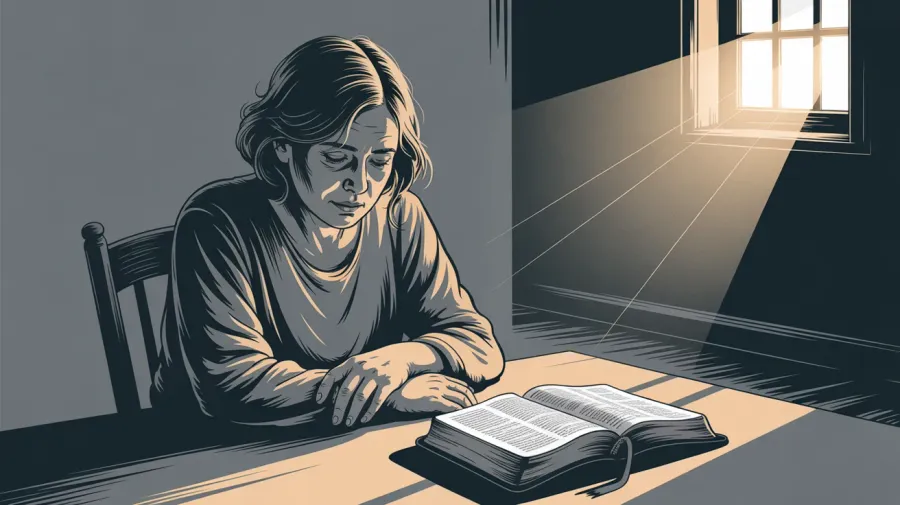
Few human experiences are as terrifying and profoundly lonely for a Christian woman as the day her spiritual life suddenly goes completely silent. You open your Bible, and the verses feel like dry ink on paper devoid of emotional meaning. You kneel beside your bed, and an echoing emptiness fills your chest. You stand in church on Sunday morning, and while those around you weep in worship, you feel carved from stone—emotionally numb, frozen, and hollow inside.
In clinical psychotherapy, I regularly counsel women of deep faith—worship leaders, Sunday school teachers, and devoted believers—who carry this secret agony locked away for fear of being condemned by church peers. They whisper in tears: "Eliza, heaven feels like brass. I fast, I rebuke dark thoughts, but nothing changes. Has God abandoned me? Have I committed an unforgivable sin that hardened my heart?"
This tormenting distress is rooted in a tragic misunderstanding: confusing the neurobiological collapse of an exhausted brain with spiritual apostasy. Spiritual apathy and depression in your prayer life are not evidence of rebellion against God, but clinical symptoms of a physical organ crying out for medical and psychological care.
📖 Foundational Insight: Delve into the precise diagnostic boundaries: The Dark Night of the Soul and Depression: What is the Difference?.
Clinical Depression vs. Dark Night of the Soul vs. Spiritual Dryness
To dissolve toxic religious guilt, we must untangle psychiatric neurobiology from authentic spiritual formation:
| Diagnostic Metric | Common Spiritual Dryness | Dark Night of the Soul (Spiritual Crisis) | Major Depressive Disorder (DSM-5-TR) |
|---|---|---|---|
| Primary Origin | Hectic schedule, temporary fatigue, lack of devotional rhythm. | Divine existential purification process (Saint John of the Cross). | Neurochemical dysregulation, genetic vulnerability, allostatic stress (DSM-5-TR). |
| Somatic Integrity | Healthy sleep, normal appetite, stable physical energy for work. | Physiology intact: normal energy, appetite, and sleep, but spiritual thirst. | Somatic collapse: terminal insomnia, appetite loss, psychomotor slowing, chronic aches. |
| Capacity for Pleasure | Enjoys playing with children, vacations, good meals, hobbies. | Enjoys ordinary life; emotional dryness is isolated to mystical spheres. | Global anhedonia: total inability to feel joy or pleasure in anything. |
| Impact of Prayer | A weekend spiritual retreat revives joy and devotional fervor. | Silent, contemplative prayer deepens interior character over time. | Trying to pray triggers tachycardia, panic, cognitive fatigue, and guilt. |
| Recommended Care | Lifestyle pacing, rest, and renewed spiritual disciplines. | Mature spiritual direction and patient contemplative holding. | Specialized clinical psychotherapy + Psychiatric medical evaluation. |
When insomnia, motor exhaustion, involuntary weeping, and loss of appetite set in, you are no longer dealing with a routine spiritual desert. You are experiencing a clinical medical condition that requires professional treatment.
The Neurobiology of Anhedonia: Why the Depressed Brain Cannot Feel God
Human spirituality does not hover in a disembodied vacuum; it is processed through the physical brain. Experiencing joy, gratitude, divine awe, and emotional connection in prayer relies upon specific neurotransmitters that are chemically depleted during clinical depression.
🧠 The Neurochemical Cascade of Apathy in Prayer:
- Mesolimbic Dopaminergic Collapse: Depression severely downregulates dopamine receptors in the nucleus accumbens. This triggers anhedonia—the neurological inability to experience pleasure, motivation, or reward, including in worship.
- Left Prefrontal Cortex Hypoactivation: The left frontal lobe governs positive affect, hope, and optimism. As it dims, the brain is flooded with catastrophic, hopeless cognitive loops.
- Amygdala and HPA Axis Dysregulation: The organism remains saturated with cortisol, trapping the nervous system in chronic panic or adrenal exhaustion.
- Hippocampal Synaptic Blunting: Sustained biological stress impairs memory consolidation, making it nearly impossible to retain or concentrate on a single Bible verse.
Demanding that a woman suffering from severe clinical depression feel "the joy of the Lord" through sheer willpower is as medically absurd as demanding that someone with a fractured pelvis run a marathon to prove her faith.
Sacred Lament: The Biblical Spirituality of Tears
One of the greatest harms committed in legalistic church settings is the tyranny of compulsory toxic positivity. Believers are told they must always appear victorious, radiant, and smiling, or else face accusations of ungratefulness and weak faith.
Yet, Scripture dedicates an entire book to raw human grief—the book of Lamentations—and reserves over a third of the Psalms for cries of despair, abandonment, and questioning God:
graph TD
    A["Toxic Religious Myth: 'A true Christian never feels empty or hopeless'"] --> B["Biblical Reality: Sacred Lament"]
    B --> C["Psalm 88: 'Darkness is my only companion' (v. 18)"]
    B --> D["Job 3: 'May the day of my birth perish'"]
    B --> E["Jesus in Gethsemane: 'My soul is crushed with grief to the point of death'"]
- Psalm 88: The only psalm in the Psalter that concludes in total darkness without a triumphant poetic resolution. The psalmist closes: "Darkness is my closest friend." And this raw prayer was breathed by the Holy Spirit to validate the darkest nights of the human soul.
- Christ in the Garden of Gethsemane (Matthew 26:38): Approaching the cross, the Son of God did not wear a plastic smile. He wept openly, declaring: "My soul is very sorrowful, even to death." His sweat like drops of blood revealed the profound biological strain of mental anguish.
God does not require eloquent sermons from broken individuals. God holds your tears with tenderness.
The Prayer of Wordless Groanings: When Words Fade
If you find yourself in a season where formulating a coherent sentence in prayer feels like climbing an impossible peak, take refuge in the comfort of Romans 8:26:
"Likewise the Spirit helps us in our weakness. For we do not know what to pray for as we ought, but the Spirit himself intercedes for us with groanings too deep for words."
The Gospel of grace assures you that:
- The Holy Spirit Intercedes for You: When your mind is frozen by depression, you do not need eloquent words. The Spirit translates your quiet weeping, your sighs, and your presence into accepted petitions before God's throne.
- Resting in God's Presence is Worship: Simply sitting in a chair, breathing, and allowing yourself to be loved without needing to produce any ministry results is authentic devotion.
- Faith is Not a Transient Emotion: Faith is an anchor of the soul in Christ's finished work, not a rush of dopamine in your stomach. Your brain chemistry may be numb, but your standing in grace remains unshakable.
This truth frees you from the burden that fuels Ministerial Burnout in Christian Women and despair.
Integrative Clinical Psychotherapy Protocol
Recovering from depression-induced spiritual apathy requires a coordinated, evidence-based approach across 4 clinical pillars:
- Comprehensive Medical Evaluation: Investigating biological contributors—evaluating thyroid panels, ferritin, vitamin D, and discussing evidence-based psychiatric medication without shame.
- Cognitive Behavioral Therapy (CBT) & Emotion-Focused Therapy: Deconstructing toxic religious shame scripts and processing underlying grief or trauma.
- Religious Decompression: Temporarily stepping down from church leadership demands so the nervous system can experience genuine rest.
- Circadian Restoration & Lifestyle Medicine: Rebuilding slow-wave sleep rhythms, morning sunlight exposure, gentle movement, and anti-inflammatory nutrition to restore dopamine and serotonin balance.
Whether seeking telepsychology therapy internationally or connecting with our Brazilian Psychologist in Dublin, clinical psychotherapy provides the compass to navigate the valley of the shadow with dignity.
God's silence in your desert is not God's absence. He continues to sustain your life in His hands, especially on the days your mind cannot feel a thing.
Related Clinical Readings:
- The Dark Night of the Soul and Depression: What is the Difference?
- Christian Counseling, Anxiety, and Faith
- Religious Trauma and Fear of Hell: When Faith Causes Suffering
- Ministerial Burnout in Christian Women and Family Life
References and Clinical Frameworks
- American Psychiatric Association (APA): Diagnostic and Statistical Manual of Mental Disorders (DSM-5-TR) (2022).
- Beck, Aaron T. & Alford, Brad A.: Depression: Causes and Treatment (University of Pennsylvania Press, 2009).
- John of the Cross, Saint: Dark Night of the Soul (Dover Publications, 2003).
- American Psychological Association (APA): Clinical Guidelines for Depression in Faith-Based Populations (2024).
🛡️ Editorial Standards: Review our Clinical Standards and Telepsychology Framework.